
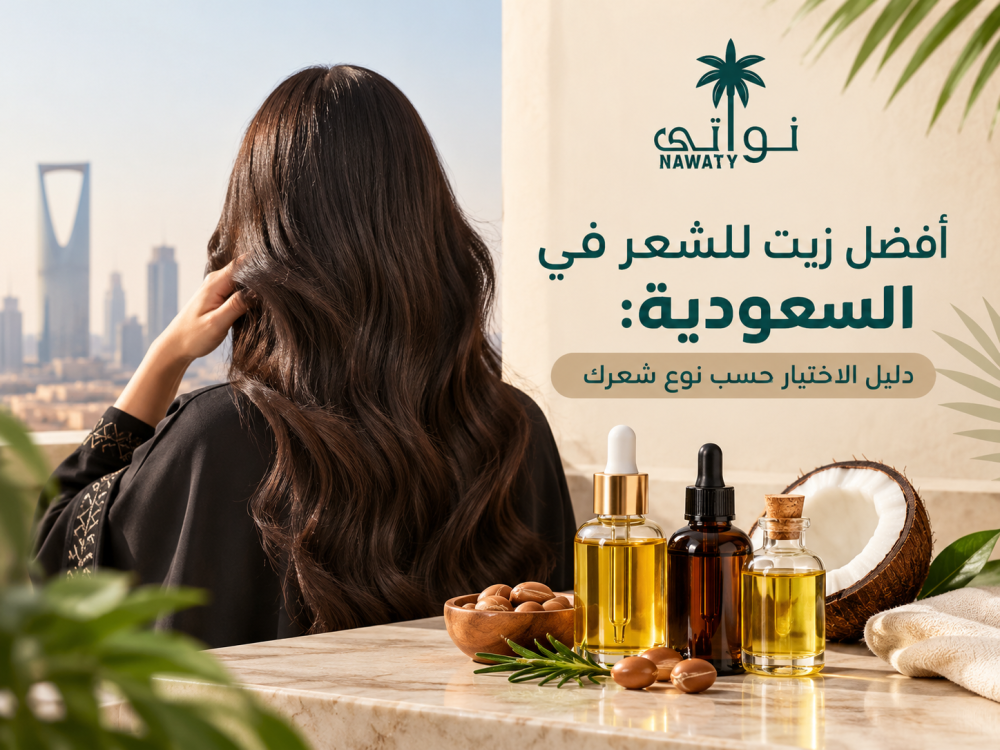
You stand before a shelf overflowing with oils, each claiming to be the best hair oil , and you're left wondering which one is truly right for your hair. The problem is often not the oil itself, but choosing the wrong oil for your hair type and scalp condition . A heavy oil on oily hair will only make it more tangled, while a light oil on very dry hair will never be enough. In this guide, you'll learn how to determine your hair type, which natural ingredients will benefit you, and how to choose the best oil for hair growth and the best oil for hair thickening without wasting your money on unsuccessful experiments.
Why is it difficult to choose the best hair oils in Saudi Arabia?
Hair in Saudi Arabia is subjected to harsher conditions than many people realize. The hot weather and direct sunlight strip moisture from the hair, air conditioners running all day exacerbate dryness, and dust accumulates on the scalp, clogging pores. Add to that the hard water in some areas, and frequent blow-drying and straightening, and the result is dull, brittle hair and a scalp caught between dryness and oiliness.
In these circumstances, the market is overflowing with options, and every product claims to be the best. That's why there's no single right answer to the question of which hair oil is best for everyone. The right answer starts with two questions: What's your hair type? And what problem do you want to solve? Once you know the answers, the choice becomes much easier, and you're less likely to buy a product that will just sit unused in a drawer.
How do you determine your hair and scalp type before buying?
Before using any oil, know your hair type. It's simple and doesn't require a specialist; just observe your hair a day or two after washing.
dry hair
If your hair feels rough, tangles easily, has split ends, and your scalp feels tight or has light flaking, then it's dry hair that needs moisturizing and nourishment. In this case, you need a rich, relatively heavy hair oil for dry hair .
oily hair
If your scalp is shiny a day after washing, and your hair sticks together at the roots, you have oily hair. Applying heavy oil to the roots is a common mistake; you need a lighter oil for oily hair , or focus its application on the ends.
mixed hair
Oily scalp and dry ends. This is very common. The solution is to distribute the oil intelligently: very little on the roots, and more on the ends.
thin or brittle hair
If your hair is thin and you are concerned about the amount of hair loss when combing, the priority is to strengthen the hair and protect the ends before anything else, and to consult a dermatologist if the hair loss is severe or sudden.
Criteria for choosing the best hair oil
Now that you know your hair type, use these criteria when buying. They're what differentiates a beneficial product from one that's just a pretty package.
First: Ingredients. Read the ingredient list before anything else. The shorter, clearer, and more reliant on well-known plant oils it is, the more reassuring you'll be. Avoid products whose main ingredients are mineral or excessively fragranced.
Second: Texture and weight. Light oil spreads easily and does not weigh down the hair, while heavy oil provides deeper nourishment but requires caution with oily hair.
Third: Scent. A very strong scent may bother those with allergies or headaches. A calm, natural scent is best.
Fourth: Transparency. A good product clearly states the instructions for use and does not promise impossible results such as "hair growing in a week".
Fifth: A sensitivity test. Try a small amount on your arm or behind your ear before full application, especially if you have sensitive skin. This simple step will save you a lot of trouble.
Natural ingredients beneficial for hair and scalp
Choosing a natural hair oil means understanding what each ingredient does. These are some of the most popular oils used in hair care, and what is known about them:
- Coconut oil: It is characterized by its ability to adhere to the hair and reduce protein loss from it, and is suitable for dry and brittle hair.
- Argan oil: Relatively light, it gives hair shine and softness, and is suitable for styling and protecting the ends.
- Jojoba oil: Its composition is similar to the natural oil of the scalp, and therefore it is very suitable for people with oily hair.
- Castor oil: heavy and thick, it is usually used to coat the hair and reduce breakage, and it is preferable to mix it with a lighter oil.
- Sweet almond oil: smooth and light, suitable for most hair types.
- Black seed oil and rosemary oil: They are often used in scalp massage , and it is preferable that they be mixed together rather than in a high concentration directly.
It's important to know that studies on some of these oils are still limited, and results vary from person to person. Therefore, it's best to rely on well-known natural ingredients and patiently monitor your hair for a sufficient period before judging any product.
Best oil for dry hair
If your hair is dry and brittle, your main problem is a loss of moisture and natural oils. In this case, you need a hair oil for dry hair that nourishes the hair and seals split ends, not just provides temporary shine.
In this case, it's best to choose an oil rich in fatty acids, such as coconut, almond, or argan oil, or a blend of several oils. Use it as a hair oil treatment one to three hours before washing, distributing it along the lengths and ends of your hair, and using less at the roots if you have a sensitive scalp.
After washing, apply just two drops to the ends while they are still slightly damp. This method locks in moisture and reduces breakage throughout the day. Don't expect very dry hair to improve after the first use; consistent care for three to four weeks is what will give you a noticeable difference.
Best oil for oily hair
Many people mistakenly believe that oily hair doesn't need oil at all. An oily scalp may actually be compensating for dryness or harsh washing, and the right oil can help balance it.
When looking for an oil for oily hair , choose a lightweight oil like jojoba or argan, and avoid heavy oils on the roots. Use a very small amount, focusing on the mid-lengths and ends, and leave the roots clean.
A common mistake is to over-oil your hair and then wash it with a very harsh shampoo, creating a cycle of dryness followed by excessive oil production. The solution is to wash your hair regularly with a gentle shampoo, use oil in measured amounts, and monitor your scalp for two weeks before making any changes.
The best oil for hair growth: What's the truth?
The question of the best oil for hair growth is one of the most frequently asked, but the honest answer is important. Oil doesn't change the fundamental rate of hair growth, as that depends on genetics, nutrition, hormones, and follicle health. What happens is that the right oil reduces split ends and breakage, allowing hair to maintain its natural growth rate and appear longer.
The realistic goal is a healthy environment: a clean and gently massaged scalp , protected ends, and a balanced diet. Massaging the scalp for five minutes with oil improves comfort and helps the oil distribute better.
If you are looking for a hair care product from a Saudi store, you can check out Nawati Oil 125 ml , which is a product of the Nawati store based on natural ingredients . Read the usage instructions on its page before first trying it.
The best oil for thickening hair: How to get a thicker look?
Like lengthening, thickening hair has two aspects: actual density, which is related to the number of follicles, and the appearance of density, which is related to the current health of the hair. Oil doesn't increase the number of follicles, but it improves the appearance of the hair, reduces breakage-related hair loss, and gives strands more body and texture.
When choosing the best oil for thickening hair , look for an oil that nourishes the scalp and strengthens hair from root to tip, and can be combined with simple habits: gentle massage two or three times a week, reducing direct heat, and washing with lukewarm water.
For comprehensive care, you can consider The hair box combines all care products in one order, and is a practical option for those who want a complete routine instead of buying separate products.
If you notice that hair loss has suddenly increased or that thinning areas without hair have appeared, consult a dermatologist before relying on any oil, as the cause may be a vitamin deficiency or a hormonal disorder that requires different treatment.
Do diet and daily habits affect the oil's yield?
Yes, absolutely. Many people buy the best hair oil and then are surprised by the poor results. The reason is that the oil only works externally, while hair health starts from within. True hair nourishment requires sufficient protein in your diet, iron, zinc, and vitamins like vitamin D, along with adequate water intake and regular sleep.
Some daily habits that make a difference over time include: reducing direct heat from hair dryers and straighteners, using a heat protectant spray beforehand, and avoiding tying hair too tightly, especially when wet. We also recommend changing your pillowcase or using a soft one that reduces friction, and combing your hair from the ends upwards with a wide-tooth comb.
If you cover your hair for extended periods, be sure to cleanse your scalp regularly, as sweating while wearing a cover increases oil buildup. These small details amplify the benefits of any oil you use, making the results of a natural hair oil more noticeable and faster.
Text comparison list: Which oil suits your problem?
This is a quick list to help you choose based on the problem, with the most important note for each case:
- For dry and brittle hair: Use a rich oil such as coconut, almond, or argan. Apply before washing, focusing on the ends. Caution: Do not weigh down the roots.
- For oily hair: Use a light oil such as jojoba. Apply a very small amount to the ends. Caution: Avoid the roots initially.
- For combination hair: Use a lighter formula for the roots and a richer one for the ends. Note: Adjust the quantity according to how your scalp feels.
- For thin hair you want to thicken: Use a balanced oil with regular massage. Note: Do not expect results in a week.
- Want longer hair? Use an oil that reduces breakage with a consistent routine. Note: It takes months to achieve the desired length.
- For sensitive scalps: This oil has a simple formula and has been tested for sensitivity. Caution: Discontinue use if any redness occurs.
The point of this list isn't to memorize it, but to understand that oil should be chosen based on the problem, not the brand name. The more precise your description of your problem, the more accurate your decision will be.
Common mistakes when buying hair oil
Many people looking to buy hair oil make the same mistakes. Learn about them so you can avoid them:
The first mistake: choosing oil based solely on advertising. A catchy ad doesn't guarantee a good product. Read the ingredients and real-life user reviews.
The second mistake: buying a heavy oil for oily hair or vice versa. This is the most common reason for failure, which is why we started this guide by identifying hair type.
The third mistake: judging after a week. Hair needs time. Give any routine at least three to four weeks.
The fourth mistake: Using too much. A small amount is enough. Too much weighs down the hair and makes it difficult to wash.
The fifth mistake: Ignoring the expiration date and storage instructions. Oils oxidize over time and with heat, and a product stored in a hot place may lose its effectiveness.
Mistake number six: Mixing several new products at once. If irritation or an allergic reaction occurs, you won't know why. Add one product at a time.
How to use hair oil correctly
Even the best product loses its value if used incorrectly. These simple steps are suitable for most types:
- Divide the hair into four sections to make distribution easier.
- Put a small amount of oil on your fingertips and warm them slightly between your palms.
- Massage the scalp in gentle circular motions for three to five minutes, reducing the amount if your hair is oily.
- Distribute the rest along the length and edges , focusing on the split parts.
- Leave the oil on for one to three hours, or as per the product instructions.
- Wash your hair with a gentle shampoo and lukewarm water, and repeat the washing if there is still a greasy residue.
You can apply this routine once or twice a week, adjusting the time according to how your hair responds. Remember, consistency is more important than quantity.
Hair oil price: Is the expensive one better? And how to buy a reliable hair oil?
When inquiring about the price of hair oil , don't let price be your only criterion. An expensive oil isn't necessarily the best, and a very cheap one might be diluted or of low quality. It's important to compare the price with the bottle size, the quality of the ingredients, and the store's reputation.
For those seeking a reliable hair oil , true assurance comes from three things: a trusted store, clear ingredients, and a transparent warranty policy. Nawati Store offers its products with a gold guarantee, details of which you can read on the product page before ordering.
If you prefer to buy more than one product for a better price, the Hair & Skin Box combines hair and skin care products in one offer. And for those who want to complete their body care routine, there are... Mirror cream and mirror scrub for skin care.
Frequently asked questions about the best hair oil
What is the best hair oil in Saudi Arabia?
There is no single oil that suits everyone. The best oil is the one that matches your hair type: rich for dry hair, light for oily hair, and balanced for combination hair. Choose a product with clearly natural ingredients, test it on a small area first, and give it three to four weeks before making a judgment.
Does oil really lengthen hair?
Oil doesn't accelerate hair growth from the follicle, but it reduces split ends and breakage, thus preserving the length of the hair that grows. Therefore, hair appears longer and healthier with continued use. However, hair growth itself depends on nutrition, hormones, and genetics, so rely on a comprehensive routine, not just oil.
Is hair oil suitable for oily hair?
Yes, provided you choose a light oil and use a very small amount on the ends, not the roots. Jojoba and argan oils are well-known options. Avoid overuse, monitor your scalp, and if it becomes oilier, reduce the frequency of application.
How many times a week should I use hair oil?
Most people only need to use it once or twice a week. Dry hair may tolerate two or slightly more applications, while oily hair only needs to use it once a week in a small amount. Monitor your hair and adjust your routine accordingly, and follow the product instructions on the packaging.
How can I tell if the oil is guaranteed and not adulterated?
Buy from a reputable store that clearly displays the product's ingredients and offers a transparent warranty policy. Check the smell, texture, and expiration date, read genuine customer reviews, and avoid overpriced offers significantly lower than the market price, as these are often a red flag.
In short: Choose your oil according to your hair type, not the advertisement.
Choosing the best hair oil isn't a mystery. Start by identifying your hair type and scalp condition , then read the ingredients. Don't expect more from the oil than it can deliver, and give your routine enough time. It's best to try one product consistently rather than changing products every week.
If you're ready to begin, browse Nawati Oil 125ml. Order it now from Nawati Store and start a care journey based on natural ingredients that suit your hair.